
I saw a painted bunting last Friday on a bird feeder at my in-laws here in Jacksonville, TX. I must say that was probably the most colorful bird I have ever seen. If you have not seen one, as I had not until this past Friday, you can do an image search on Google and see a number of pictures.
Not purple martin related but I know there are many bird enthusiasts that read the forum.
Kenneth
Painted Bunting: A Beautiful Bird!
-
Linda Reynolds
- Posts: 1308
- Joined: Tue Nov 11, 2003 8:33 pm
- Location: Adamsville, TN
Kenneth, I think every birding enthusiast envies those that see and/or host painted buntings. I have never actually seen one, but it is on the top of my wish list of hopeful bird sightings. Even photos of the male are magnificently beautiful and I am happy that you experienced a real-live sighting.
A good friend of mine, southwest of you, in Austin is hosting them for the first time this year, and sees both the male and female feeding regularly from the pile of white millet he offers them. I understand millet is one of their favorite seeds. According to Sibley's guide, their summer nesting range includes all of Texas, so you just might eventually get very lucky and host some in your yard.
Unfortunately, white millet is also a favorite food of the English house sparrow. That is kind of a catch 22 for purple martin enthusiasts wanting to rid their property of house sparrows. However, you might offer some millet in hopes of trapping some house sparrows and at the same time attract painted buntings.
Now that martin season is coming to an end and you no longer have to worry about house sparrows competing for martin housing, you might want to try offering some millet in very limited areas. Wouldn't it be wonderful if you could attract the painted buntings to your yard?
We are located in TN, and host only the indigo bunting. We are always thrilled to see the beautiful male. He is not quite as special as the painted, but beautiful nonetheless.
So happy to hear about your special experience.
A good friend of mine, southwest of you, in Austin is hosting them for the first time this year, and sees both the male and female feeding regularly from the pile of white millet he offers them. I understand millet is one of their favorite seeds. According to Sibley's guide, their summer nesting range includes all of Texas, so you just might eventually get very lucky and host some in your yard.
Unfortunately, white millet is also a favorite food of the English house sparrow. That is kind of a catch 22 for purple martin enthusiasts wanting to rid their property of house sparrows. However, you might offer some millet in hopes of trapping some house sparrows and at the same time attract painted buntings.
Now that martin season is coming to an end and you no longer have to worry about house sparrows competing for martin housing, you might want to try offering some millet in very limited areas. Wouldn't it be wonderful if you could attract the painted buntings to your yard?
We are located in TN, and host only the indigo bunting. We are always thrilled to see the beautiful male. He is not quite as special as the painted, but beautiful nonetheless.
So happy to hear about your special experience.
Ever-Grateful,
Linda
Linda
-
Kenneth Hicks
- Posts: 74
- Joined: Thu May 19, 2005 8:50 am
- Location: Texas/Jacksonville
Linda,
Thanks for your response and suggestion of offering white millet. I am not sure what my mother-in-law had on her bird feeder but it definitely attracted them.
Do you know where they make their nests? It would be a beautiful bird to have in the yard.
Kenneth
Thanks for your response and suggestion of offering white millet. I am not sure what my mother-in-law had on her bird feeder but it definitely attracted them.
Do you know where they make their nests? It would be a beautiful bird to have in the yard.
Kenneth
-
Linda Reynolds
- Posts: 1308
- Joined: Tue Nov 11, 2003 8:33 pm
- Location: Adamsville, TN
Kenneth, not much nesting information available in Sibley's Guide or the National Geographic Field Guide, but I did find this in Stoke's Field Guide:
Nest of forb stems, grasses, and leaves, lined with hair, fine grasses, rootlets, and occasionally bits of snakeskin, placed in low filiage of tree or shrub 3-25 ft. above ground. 3-5 light blue-white or gray white with brown spotted eggs. Incubation: 11-12 days, Fledge 12-14 days.
From A Guide to the Nests, Eggs and Nestlings of North American Birds by Paul J. Baichich and Colin J.O. Harrison:
Nest: A neat deep cup partly woven around its supports. Of grasses, finer weed stems and leaves; lined with hair and fine grasses. Built by female in as few as 2 days. Breeding season: Begins late March in southwest, to early to mid-May elsewhere. Usually double-brooded, sometimes up to four.
Nest of forb stems, grasses, and leaves, lined with hair, fine grasses, rootlets, and occasionally bits of snakeskin, placed in low filiage of tree or shrub 3-25 ft. above ground. 3-5 light blue-white or gray white with brown spotted eggs. Incubation: 11-12 days, Fledge 12-14 days.
From A Guide to the Nests, Eggs and Nestlings of North American Birds by Paul J. Baichich and Colin J.O. Harrison:
Nest: A neat deep cup partly woven around its supports. Of grasses, finer weed stems and leaves; lined with hair and fine grasses. Built by female in as few as 2 days. Breeding season: Begins late March in southwest, to early to mid-May elsewhere. Usually double-brooded, sometimes up to four.
Ever-Grateful,
Linda
Linda
I was privileged to host a pair of Painted Buntings last year....the first ones I had ever seen. The male would sit on the electric wire next to my carport and sing his song.
But, alas, this year they are not here.
Maybe next year.
geezer
But, alas, this year they are not here.
Maybe next year.
geezer
#PMCA #birding #birders
-
Linda Reynolds
- Posts: 1308
- Joined: Tue Nov 11, 2003 8:33 pm
- Location: Adamsville, TN
geezer, it is my understanding they are quite elusive. I have only seen photos and reports from fellow backyard birders that observe them at feeders........Perhaps, you too, should offer some very limited amounts of millet and see if they show up.
Please remember that the millet might also attract an enemy of our martins.......the English house sparrow.
Please remember that the millet might also attract an enemy of our martins.......the English house sparrow.
Ever-Grateful,
Linda
Linda
-
Guest
Hey Kenneth,
I had a pair this year. The male is a colorful bird. The female is a solid kinda lime green ? with a greyish underside. They are both beautiful and a joy to watch. Mine seem to hang around the area of my yellow finches or is it the finch food? Love to watch them.

Peace and many martins,
I had a pair this year. The male is a colorful bird. The female is a solid kinda lime green ? with a greyish underside. They are both beautiful and a joy to watch. Mine seem to hang around the area of my yellow finches or is it the finch food? Love to watch them.
Peace and many martins,
-
Guest
I'm 50 years old, and this is the first year I have ever seen one. I have a pair that has been visiting one of my feeders, but haven't seen any babies, so they may just visit for the food. Any way I can have the pleasure of seeing them in real life is fine with me. 
-
Peggy Riley
- Posts: 885
- Joined: Tue Nov 11, 2003 1:21 pm
- Location: TX/Tolar
The babies will be the drab olive green color like the female. They are also drawn by a birdbath particularly one with running water. I had 3 males at the birdbath last night. They are truly one of my favorite birds.
I believe they have small territories and the feeder and birdbath are common areas. I did see a fight earlier this summer between two males while a female was on the feeder!
I believe they have small territories and the feeder and birdbath are common areas. I did see a fight earlier this summer between two males while a female was on the feeder!
http://birdsbybaranoff.com/images/2735- ... c11x14.jpg
Here is a pic. of a Painted Bunting if it will open. very beautiful bird.
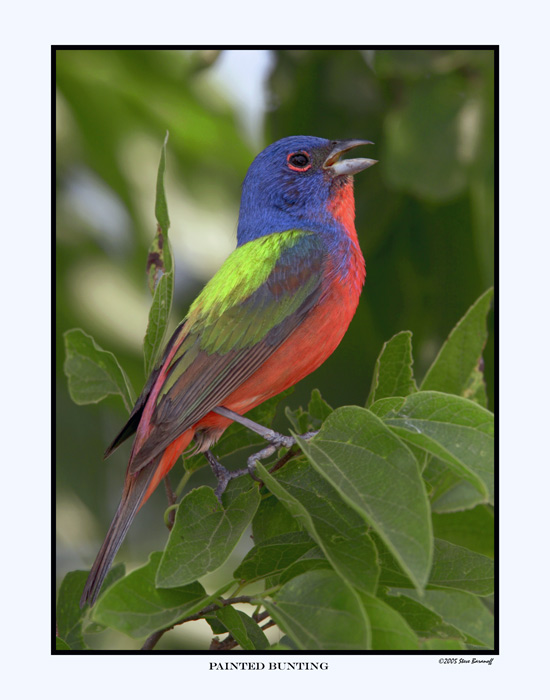
Here is a pic. of a Painted Bunting if it will open. very beautiful bird.